• HOME
  • THE ECHO OF OUR VOICES: The Day May Break, Ch. Four
    • Photographs
  • SINK / RISE: The Day May Break, Ch. Three
    • Photographs
    • Video
    • ESSAYS
  • The Day May Break CH. 1 & 2
    • PHOTOGRAPHS: CHAPTER 1
    • PHOTOGRAPHS: CHAPTER 2
    • ESSAYS
      • The Day May Break — Concept
      • The Acoustic Album
      • Foreword by Yvonne Adhiambo Owuor
      • Sanctuary
      • Out of Africa
      • Foreword By Daniel Sherrell
    • Survivor Stories
      • SURVIVOR STORIES: CHAPTER 1
      • SURVIVOR STORIES: CHAPTER 2
    • NGOs
    • PRESS
    • Reviews
  • This Empty World
  • Inherit the dust
  • ON THIS EARTH TRILOGY
    • ON THIS EARTH (2001-2004)
    • A SHADOW FALLS (2005-2008)
    • ACROSS THE RAVAGED LAND (2010-2012)
  • - Bookstore -
  • EXHIBITIONS
  • LIMITED EDITION PRINTS
  • BIBLIOGRAPHY
  • ESSAYS
    • Essays: The Echo of Our Voices
      • The Echo of Our Voices
      • Accidents Will Happen - The Making of The Echo of Our Voices
      • I am a Mountain by Arianna Rinaldo
      • The Many Faces of Love: Foreword by Samar Yazbek
    • Essays: The Day May Break
    • Essays: Sink / Rise
    • Essays: This Empty World
      • This Empty World — Concept (clone)
      • Bloodshot Eyeballs
    • Essays: Inherit the Dust
      • Inherit the Dust — Concept
      • Turn Me On
    • Essays: Across the Ravaged Land
      • Across the Ravaged Land
    • Essays: A Shadow Falls
      • INTRODUCTION by NICK BRANDT
      • FOREWORD by VICKI GOLDBERG
      • FOREWORD by PETER SINGER
    • Essays: On this Earth
      • AFTERWORD by NICK BRANDT
      • FOREWORD by ALICE SEBOLD
      • INTRODUCTION by JANE GOODALL
  • SELECTED PRESS
  • REVIEWS
  • SHORT FILMS
  • NEWS
  • ABOUT
  • BIG LIFE FOUNDATION
  • NEWSLETTER SUBSCRIPTION
  • Contact
Nick Brandt
    THE ECHO OF OUR VOICES: The Day May Break, Ch. Four
      Photographs
    SINK / RISE: The Day May Break, Ch. Three
      Photographs
      Video
      ESSAYS
      The Day May Break CH. 1 & 2
        PHOTOGRAPHS: CHAPTER 1
        PHOTOGRAPHS: CHAPTER 2
        ESSAYS
          Survivor Stories
            SURVIVOR STORIES: CHAPTER 1
            SURVIVOR STORIES: CHAPTER 2
          NGOs
          PRESS
          Reviews
          A SHADOW FALLS (2005-2008)
        - Bookstore -

      Title

      A C C I D E N T S  W I L L  H A P P E N

      THE MAKING OF 

      THE ECHO OF OUR VOICES 

      It happens every time I come up with a new concept. 


      At the beginning I think, “oh, this one’s not so hard.” The concept usually seems quite simple at the point of inception, but then reality has a habit of presenting itself. 


      So if I had known, from the outset, how hard and expensive it would be, would I still have embarked on this project? Yes. I would. Perhaps that’s obsession for you. In reality, I have invariably found that you have to drag your latest baby into the world, kicking and screaming. 


      When you look at this series of photographs, it probably doesn’t look like it was actually that hard to execute. The photographs may look relatively simple—just people on boxes. However… 


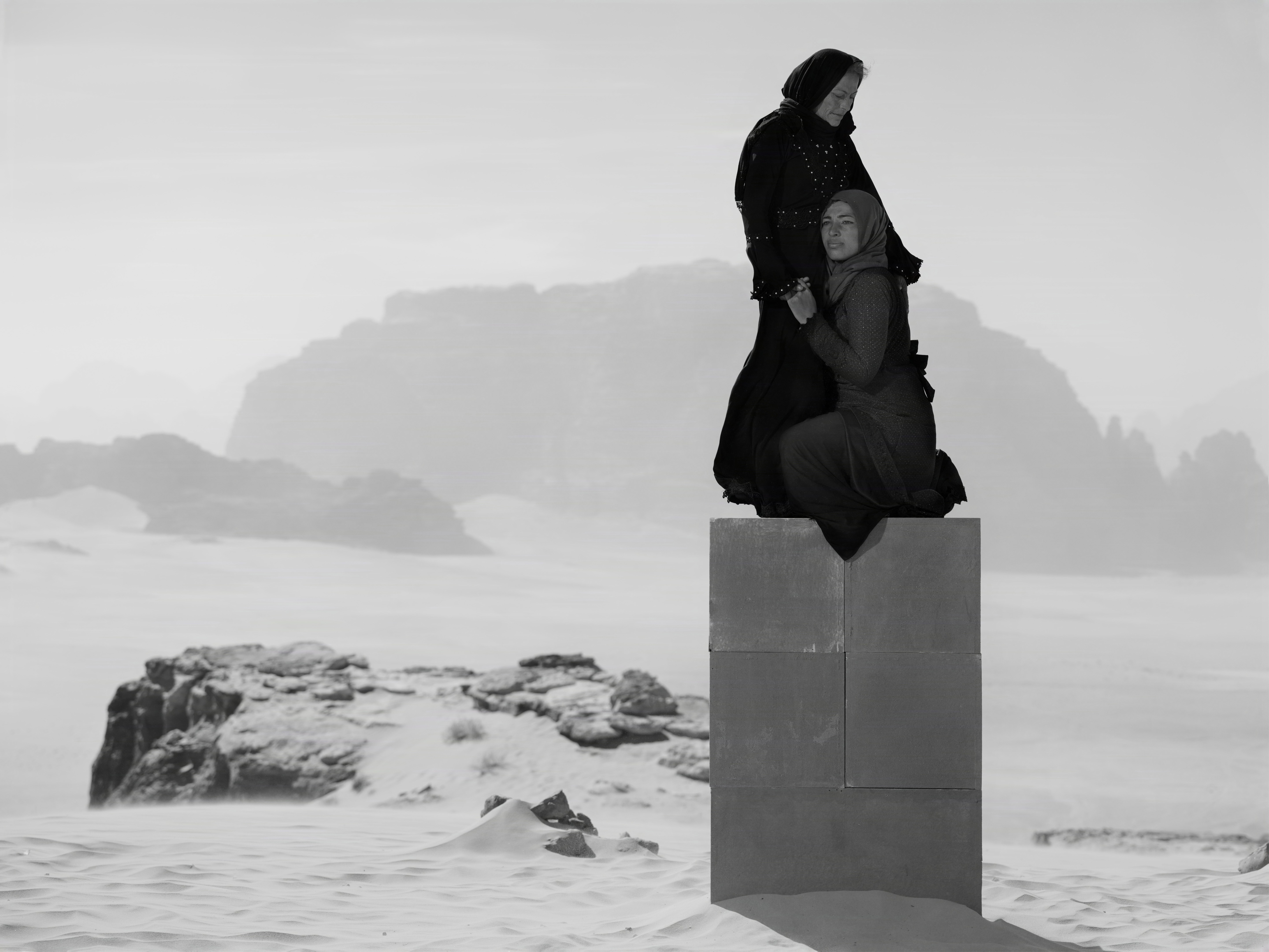
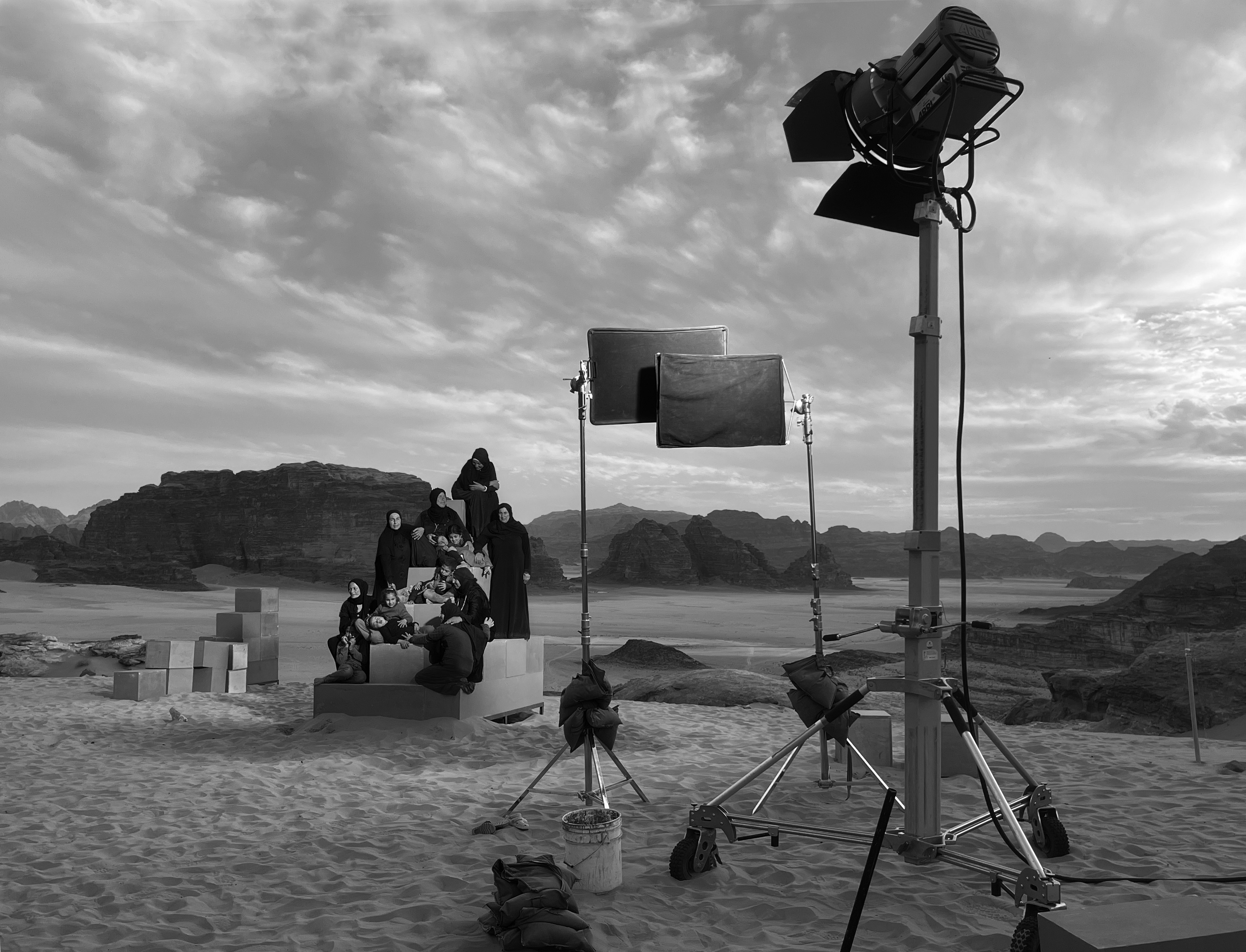
      I could have made everything much more simple if we had just thrown a bunch of boxes on the back of a truck and driven from place to place around Jordan, to the camps where the families were currently living. But then we would never have had this location— Wadi Rum desert in southern Jordan. It’s a location that is a poetic symbol of an increasingly desiccated world, mountains rising up from the dunes that become a visual echo of the people. So for me, there was no choice: we had to bring all the families to the desert and photograph them there. 


      In chapters one and two—photographed in Kenya, Zimbabwe, and Bolivia—we also had to bring all the people impacted by climate change to the conservancies and sanctuaries where the animals were. But of course, that involved far fewer people. 


      When I arrived in Jordan in January 2024, I spent the first two weeks traveling around meeting families impacted by climate change. Lubna, our families researcher and coordinator, had met and interviewed them over the previous two months. There were five of us—me, Lubna, my producer Harry, and my two creative collaborators: Elyse, who had traveled from Brooklyn, and Sandra, who had lived in Jordan for fifteen years. This was my core creative team. 


      This was necessary time for me, not just to meet the potential families and decide who to invite to the shoot, but to start to get an understanding of how they lived. I had never been to the Middle East before, and I was acutely aware of the need to know the people, their culture, their family connections, before we began photographing them.
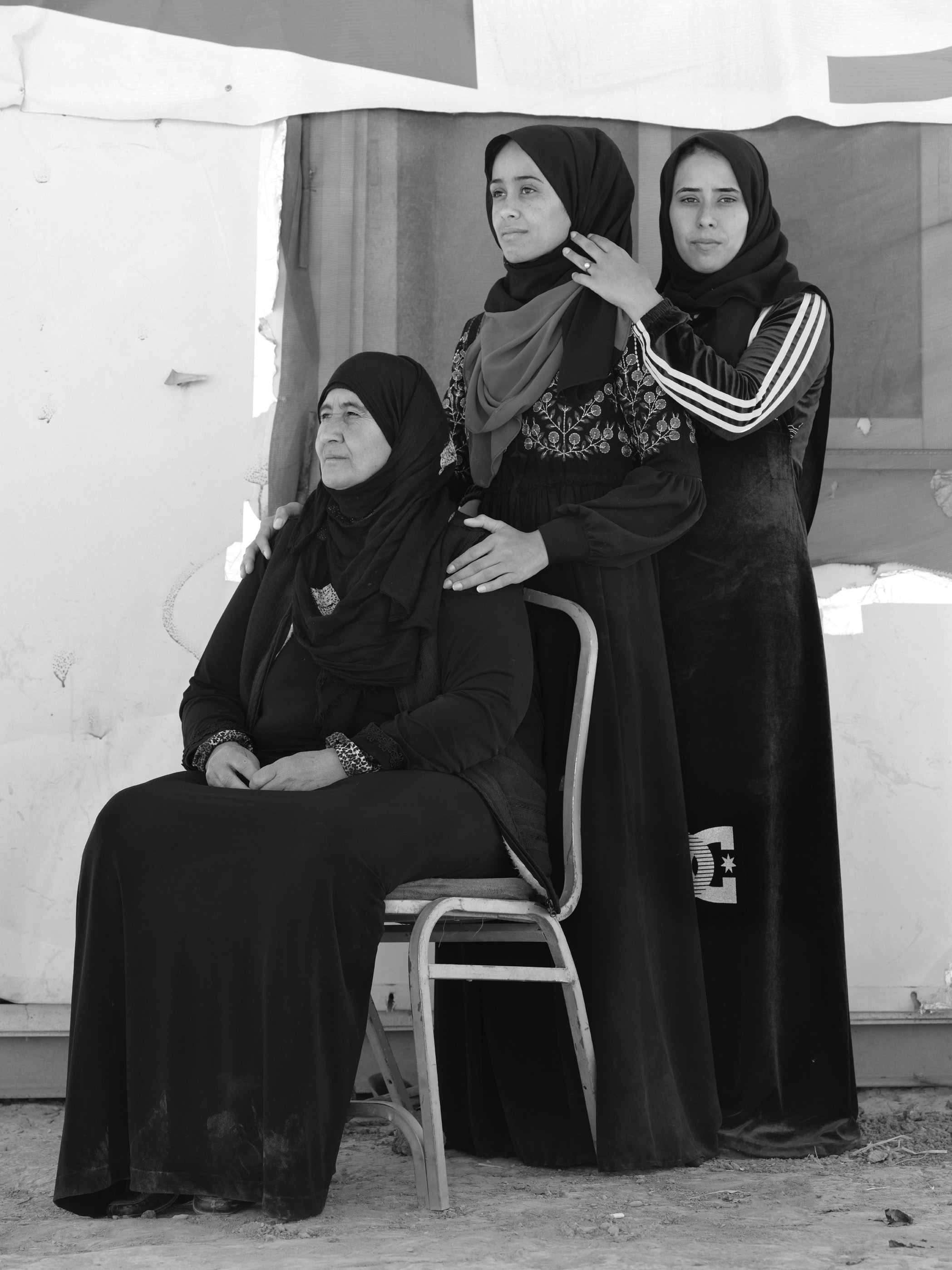
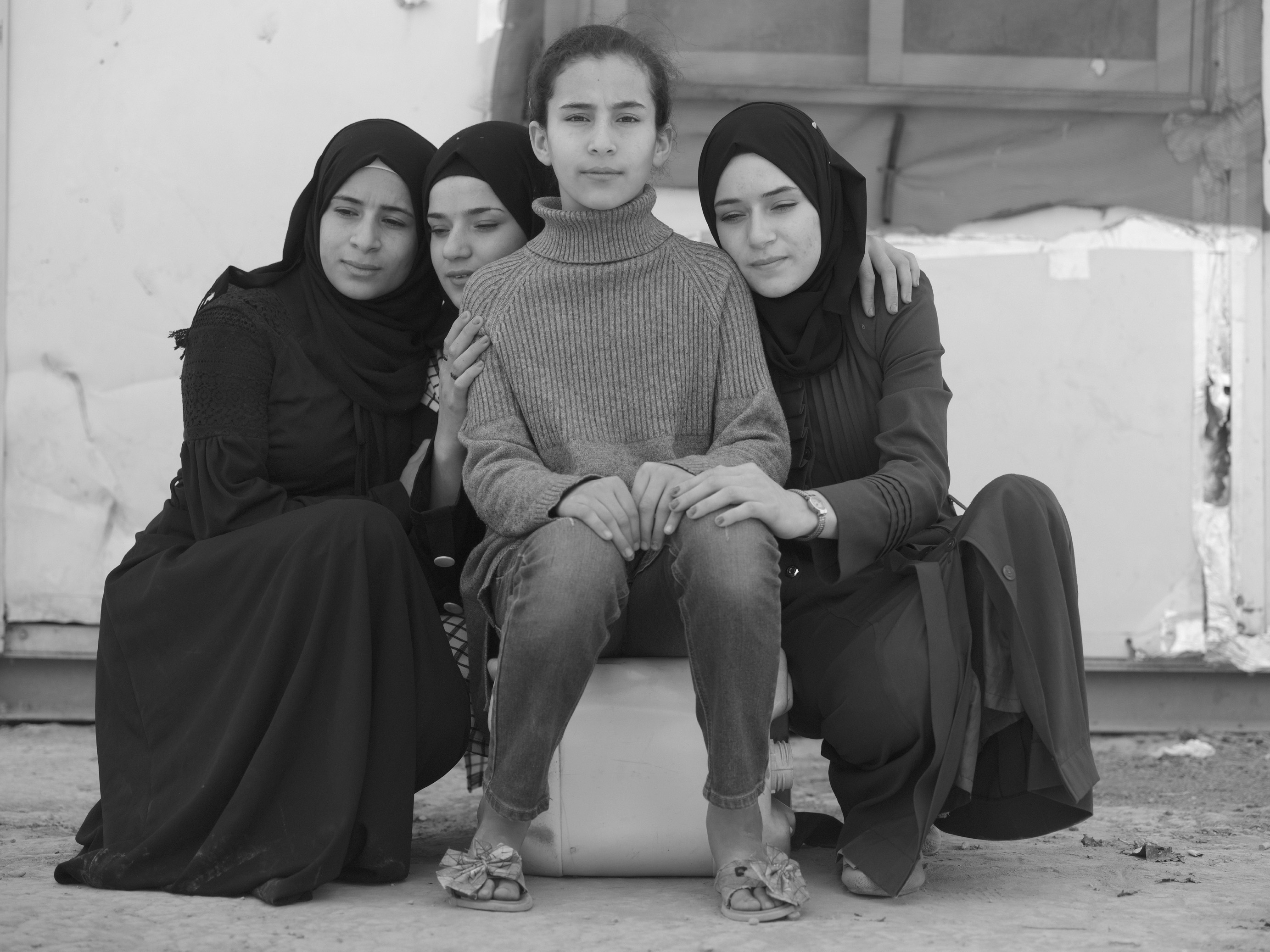
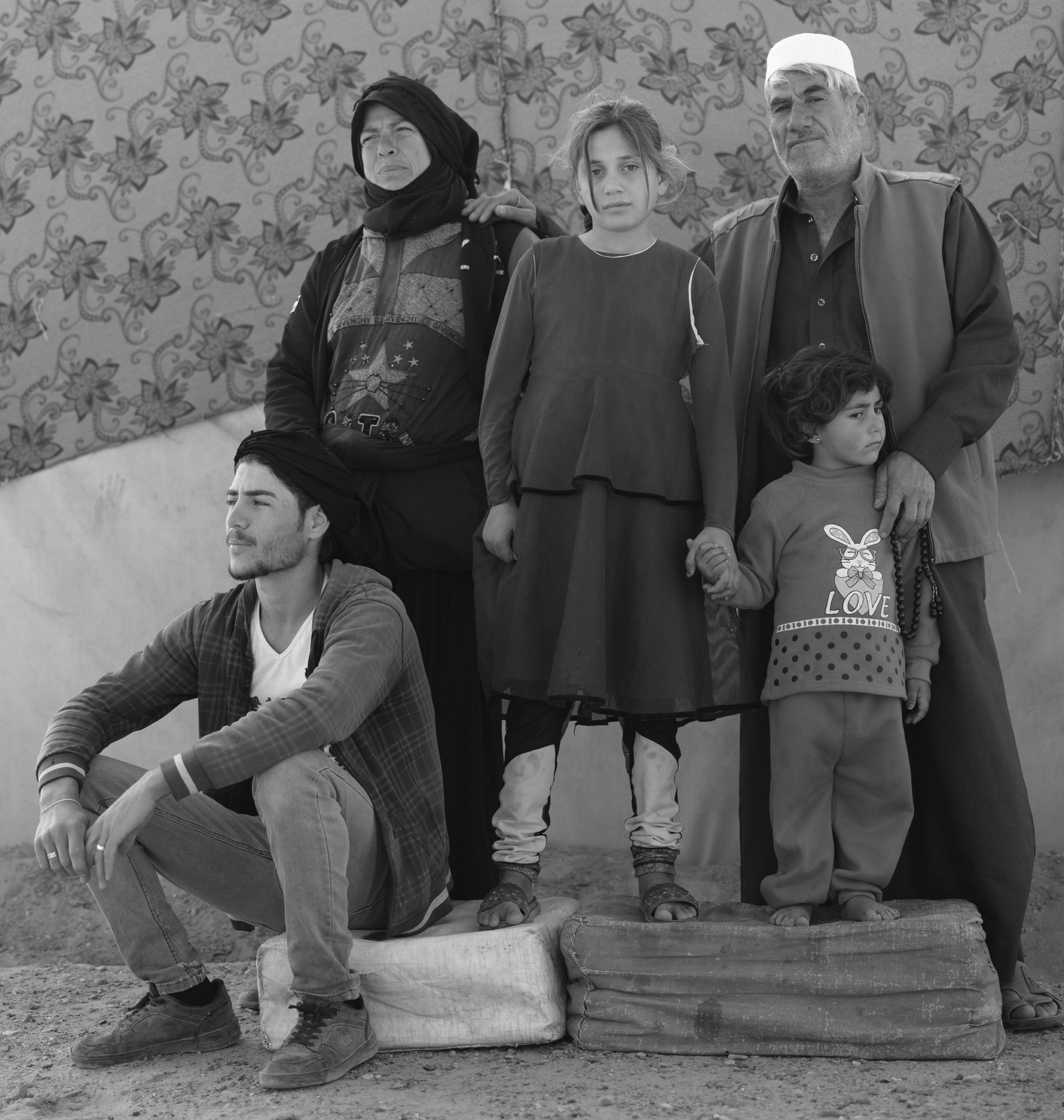
      “Casting” Photo of Ftaim, Ariam, and Khairya Near Their Home

      “Casting” Photo of the Rakan Sisters Near Their Home 

      ”Casting” Photo of Kamal and His Family Near Their Home

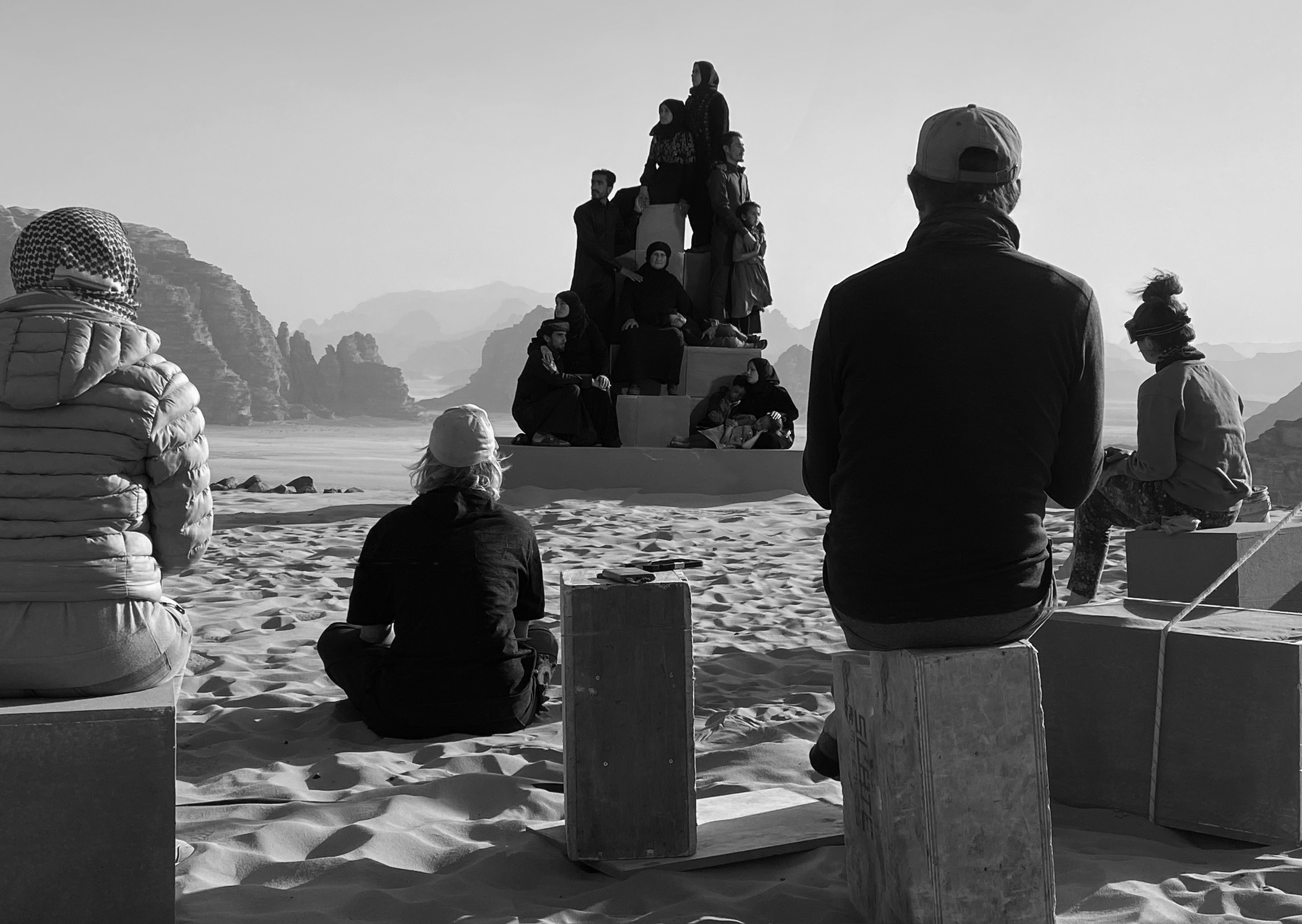
      Once we were based down in Wadi Rum for the six-week shoot, we invited around forty family members for each six-day week. Why so many people at a time? 


      I like the unexpected. Serendipity and accidents that are far more interesting than anything I might pre-script. For me, it is like a kind of photographic jazz, each person a musical note, if you will. And you work with them to see if, sometimes out of nowhere, a visual melody forms that somehow indefinably moves you. 


      Usually it doesn’t. We probably shot four hundred setups, although many were reshoots. There are forty-five finished photographs in this book. That’s a pretty low success rate. But of course, that failure is a fundamental part of any creative process. We’re just trying to fail better. Good luck achieving something entirely to your satisfaction. And if you do, how much did chance factor into that? For me, chance invariably does. That’s the beauty of it.


      It may be that the winds cause brutal sandstorms, but, as a result, kick up waves of sand and blow the garments in ways that transform the photograph. Or it may be that two of the kids are getting cold and you send them back to the tent, which instantly declutters the grouping in the frame, and now makes the arrangement fall into place (this is Women with Sleeping Children, the cover image). Indeed, I could describe something that happened by accident for the better in every single photograph in this book. 


      This is not revelatory stuff. It’s what everyone who creates goes through. It’s just how much you decide to embrace the problems and accidents. 

      Marooba and Mayadah

      Talking of problems, every shoot that I have ever done has had me going into battle with my old nemesis, the sun. 


      Every shoot, I try and photograph in the rainy season—in theory, that’s the time of year that has the most cloud cover. I have always much preferred the aesthetic of soft light without strong shadows and highlights. I find it not just more beautiful but also more aesthetically appropriate for the somber sensibility I generally seek. 


      And sure enough, out of thirty-five days of scheduled shooting, we had just a couple of overcast days at the beginning. It was day after relentless day of clear blue skies. For the first two to three weeks, I fought, resisted, denied shooting in the morning sun, and, in so doing, wasted precious shooting time. 


      And then about two weeks into the shoot, I took a photograph: Marooba and Mayadah, in the worst, brightest sunlight, in the middle of a sandstorm that blew out everything even more. Looking at the photograph that night, I acknowledged something that I instinctively knew from the start: as a project about climate change, glaring sunlight tells the story more than moody atmospheric clouds and soft light. 


      I have spent two decades while photographing waiting for cloud, and, as such, I was set in my cloud-covered aesthetic ways. But after this photograph, I finally learned to embrace the sun for this shoot. 


      A different serendipity occurred during the moonlight shoots. While the families show strength and defiance during the day shots, the final selection of photographs at night is very different—a sense of rest and repose. But it wasn’t planned that way. Again, an obstacle, a problem, forced a more interesting result. 


      These photographs were taken in the light of the full moon only. This required five-second exposures, during which everyone had to hold completely still. Unsurprisingly, we discovered that it was very hard for everyone. So we decided to choreograph nearly everyone to lean against one another, in repose, so that each person would provide stability for the other. This gave a much-needed variety to this body of work, the difference in mood and energy between the sunlight and moonlight photographs, which wouldn’t have happened if the long exposure times were not such a problem. 


      Setting Up Ftaim and Family 

      In all my previous work, I have generally asked the people in the photographs to pose so that they feel comfortable. Yes, I might ask someone to climb a stepladder so that their head is the same height as the head of the giraffe next to them, but generally I ask people to find their own way of presenting themselves. 


      By contrast, this chapter—with its connections between family members on these human islands/sculptures—frequently required complex choreography that I felt was beyond my set of skills. That’s why I worked with two creative collaborators, Elyse Blennerhassett and Sandra Jelly, who brought an immeasurable amount to the project with their emotional visualization of human connection. I could not have done this project without them. 


      And then there are the families. I am so grateful for their involvement. After each ses-\sion, they would climb down off the boxes and come over to look at a few frames through the viewfinder. I would like to think that they saw that they were being photographed with dignity and respect. I hope that I have served them well. 


      As I write this in February 2025, I can’t know what will happen, whether they will still be in Jordan, moving to where the cycle of rains takes them, or whether perhaps they will have made it home, to restart their old-new lives back in Syria, their dream of a new life actually a return to their old life. To be home. 


      Wherever they are, let us honor them.