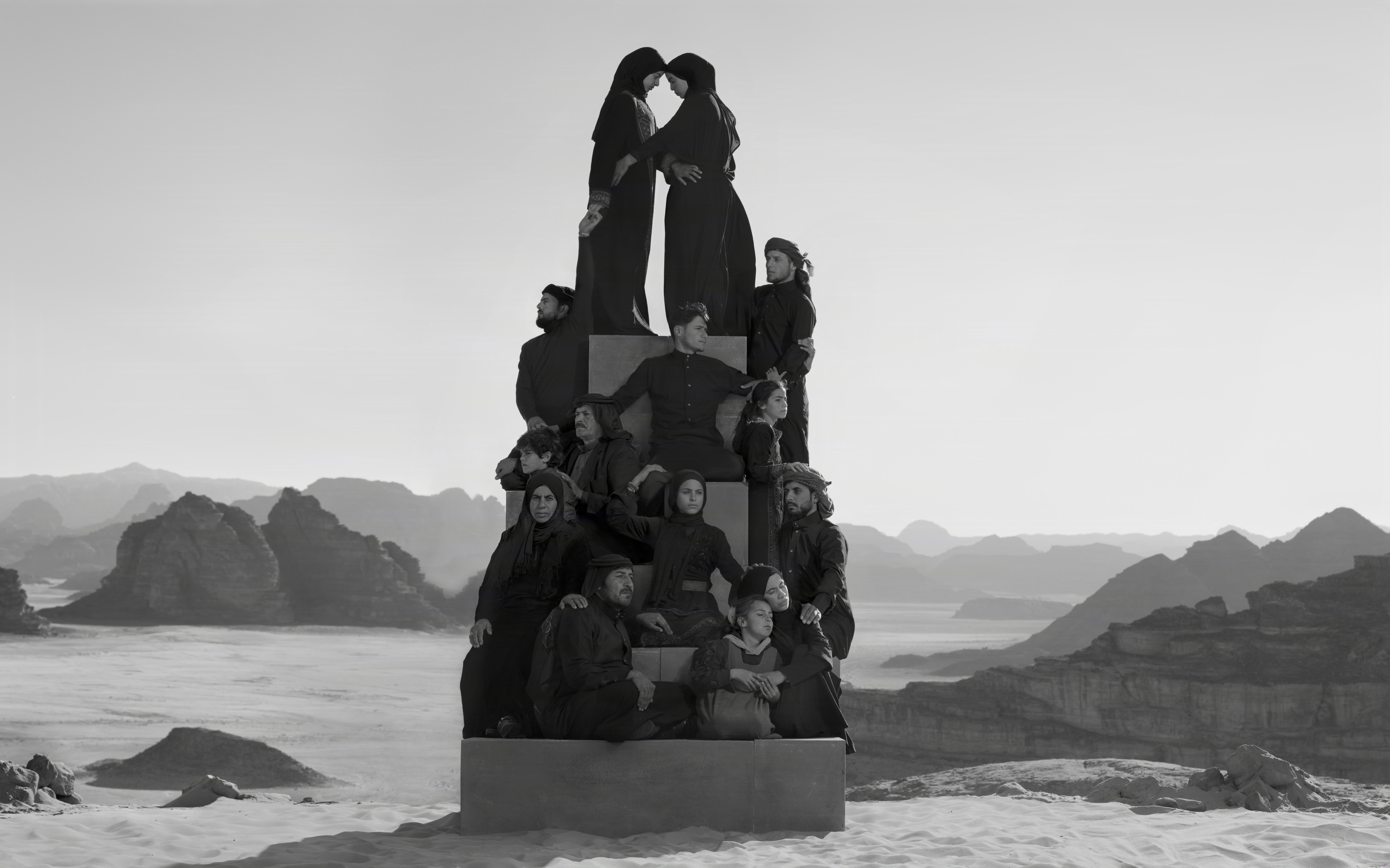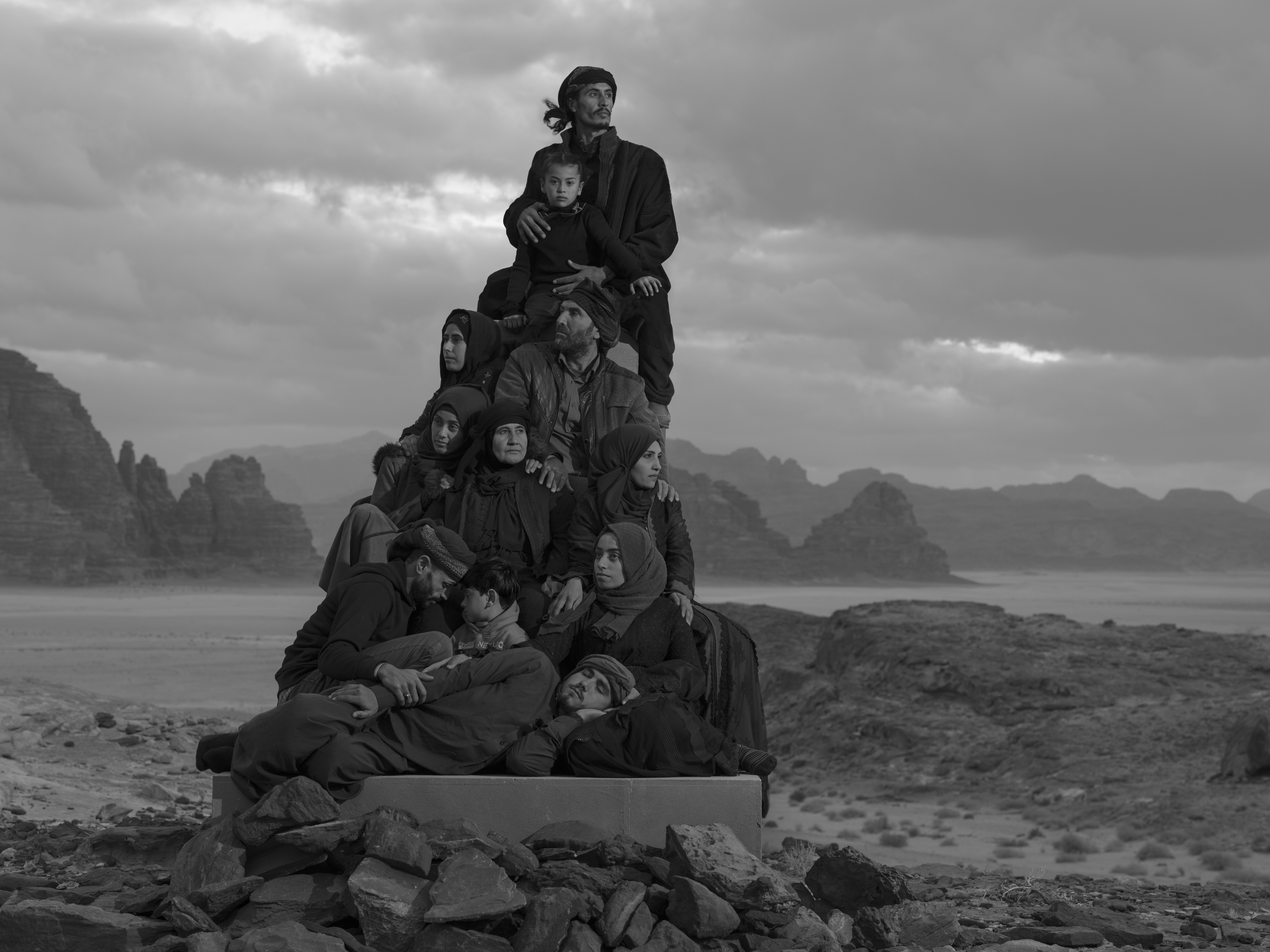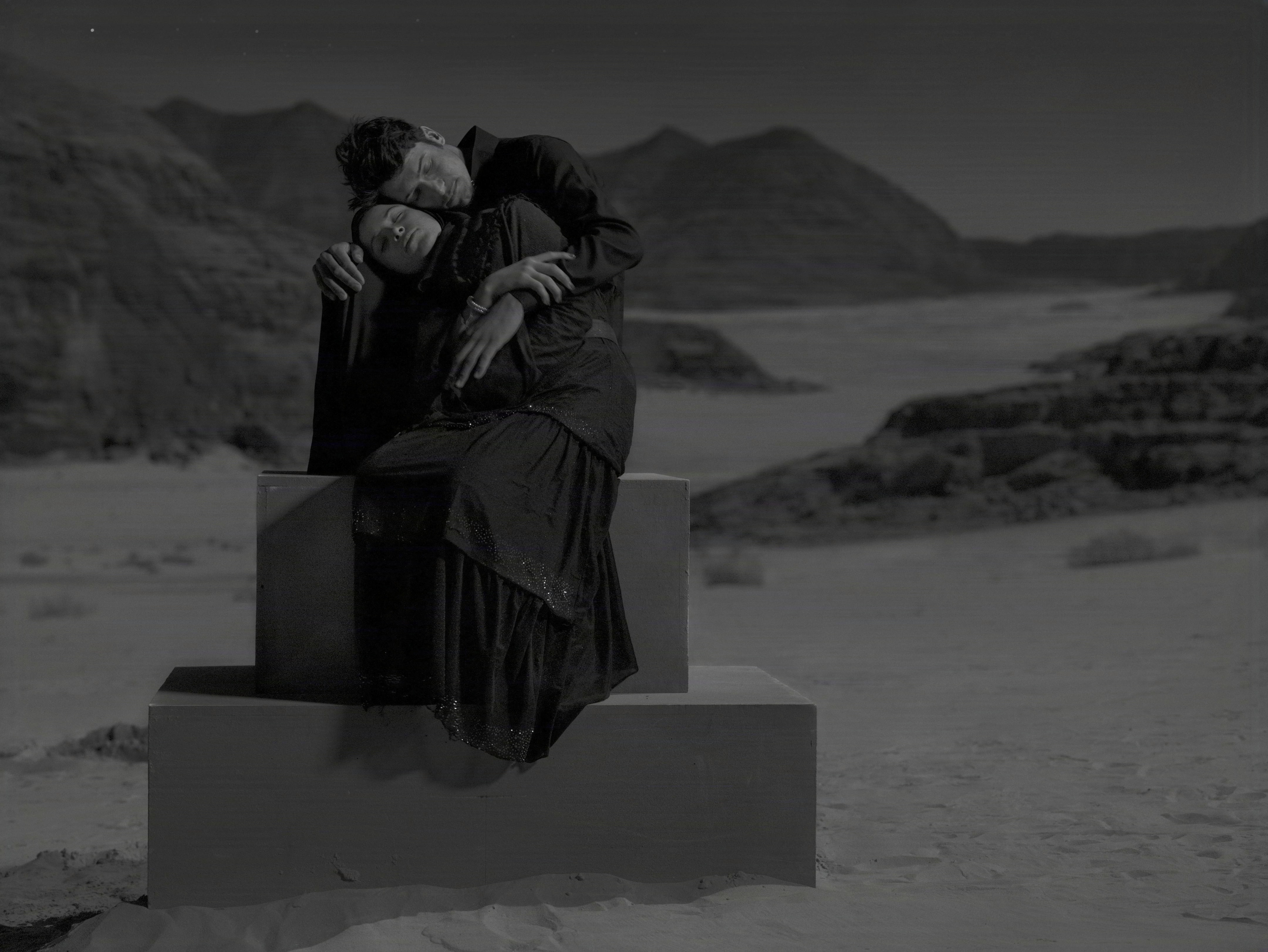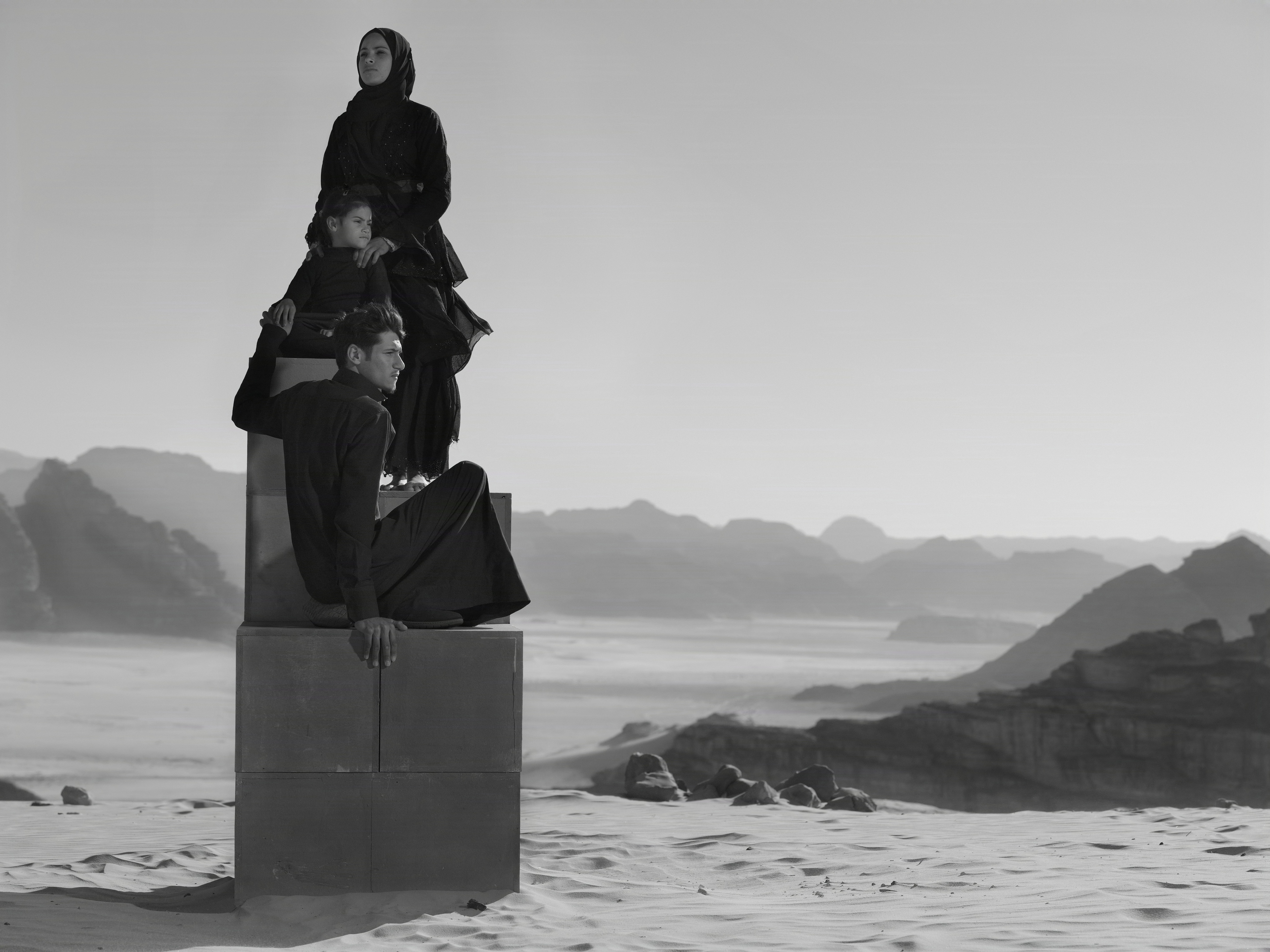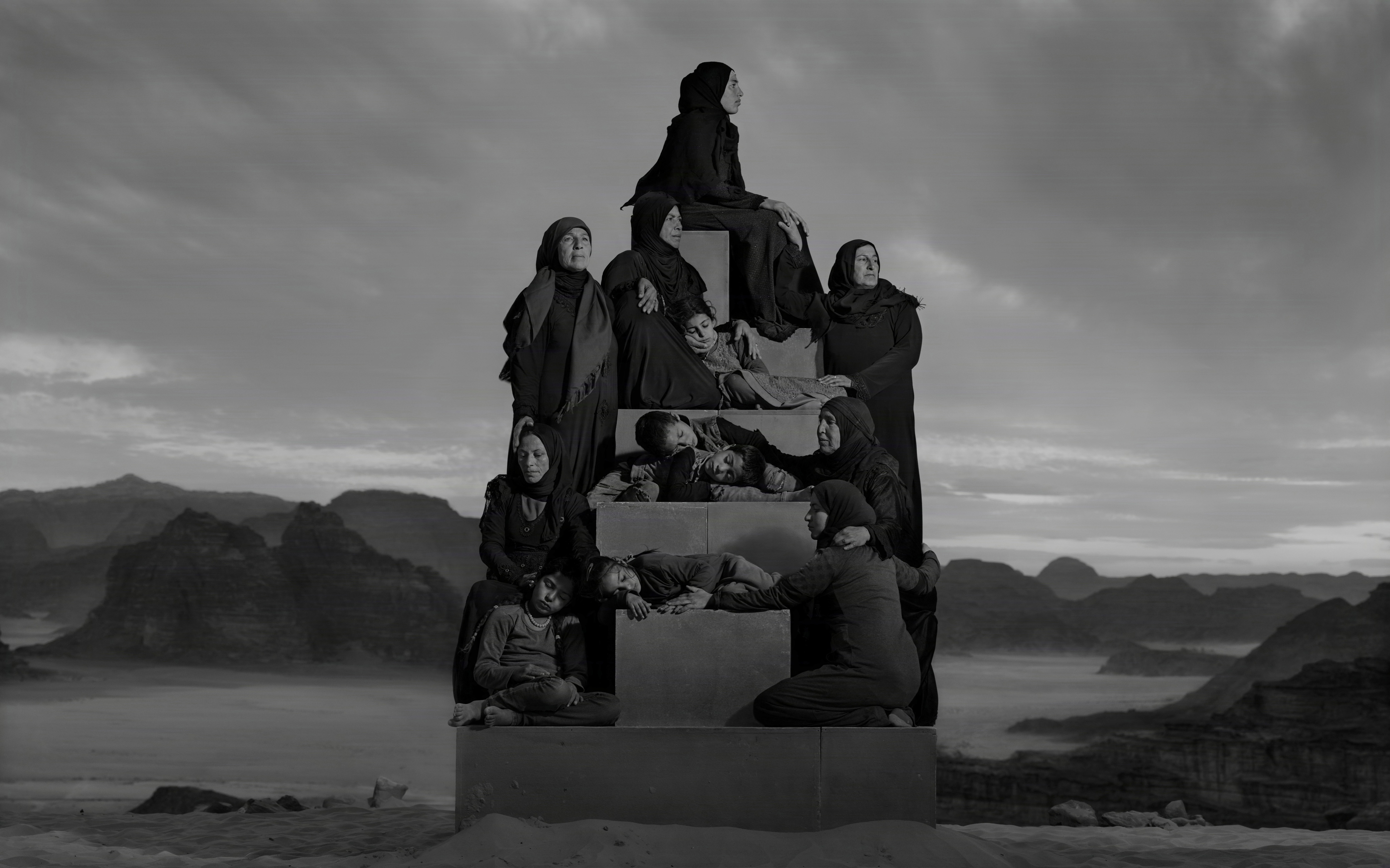
Black and white hold sway over the scene. These foundational shades take us back to the beginning of all things, on the edges of nothingness, as if expressing our desire to return these people to their mothers’ wombs. Here in the depths of these photographs, one sentence echoes: Look, these people are suspended in darkness, they are waiting to return home.
I flip through the photographs with a trembling hand, one image after the next, beholding them with the reserve of a foreigner, of someone in exile. I notice each incredible moment, each clever shot revealing their deep, subconscious terror. As I take in the details, in every photo a sense of absence looms. I recall the title of my novel, Gates of the Land of Absence, published in English as The Crossing. I see myself in these photographs, and I see shades of pain from Syria, the country they call by that name. I see our shared reality in this brutal world. We humans, suspended on the edge of existence, moving neither forward nor back, fixed like a gash in eternity. Staring into space, into absence. No wonder each person’s eyes, when open, are fixed on the unknown, each without exception. Their eyes become nothingness itself, gazing toward some horizon, perhaps toward their long-awaited salvation.
Black, white, and shades of gray wrestle on the faces of the subjects, who seem sculpted like Greek statues. Were we to remove the black garb, symbolic of their situation, they each would seem like icons waiting to be painted. Or like attempts to remake the very idea of exile, beyond its modern definition.
The setting is Jordan, their land of exile, where they live as refugees, as humans waiting to return or to depart for a new unknown. They seem to be searching for a land where they can put down roots, hoping that life will grant them the opportunity to grow again. They are posed in a way that elicits in the viewer a desire to join them, and to become part of their sorrows.
Each photograph, though silent, evokes a scene of self-contained hell. Silence is the protagonist, the sole means of conveying the purity of the subjects’ pain. But can pain be pure? Yes, this much is clear in their faces and their voluminous silence. Silence doesn’t mean the absence of volume; no, it is a language unto itself. I hear them cry out, though their mouths are closed. Their eyes, too, are sometimes closed, sometimes open. Their arms, outstretched toward each other, translate silence across language. This is how photographs speak.
The photos seem to come from a time when there was space for silence, when silence was a language in which to contemplate pain, to repeat conversations again and again. We say much when we are silent. Meaning opens to interpretation, and imagination becomes a refuge for thought. These figures in black are silent in order to cry out, to announce themselves. They say to us: Look! We are hanging by our necks in the great gallows called existence. Come, bear witness to our pain. We will not say much.
How brilliant to portray pain without uttering a single syllable! What language can express pain solely by displaying it in black and white, on cubic shapes with sharp edges?
Then I ask myself: Is there an invisible string pulling me toward them? Why do I find myself unable to turn away from these images, or to stop gazing at them? The women stand strong, their bodies dignified, creating a silent language between each other and the rigid cubes that Brandt uses as a stage for the absurd. Girls’ hands disrupt the sense of distress, adding a degree of gentleness to the image, and evoking the tension between the right to express one’s pain and the right to keep silent.
The photographs keep coming, and I search for myself within them. I no longer think about writing; instead, I search my soul for outrage at injustice against humanity. Each photograph is a painting, and each painting is a small detail in a larger scene of gripping pain that the photographs attempt to address. When I stand before them, time itself stands still.
Each photograph contains a rebellious cry. The images tell us, with solemn dignity: Do not avert your eyes. This is a moment held in time, it will not pass quickly. And I am transfixed by them because I, too, am suspended in limbo. We cannot move on, cannot escape that moment— the moment of repudiation, of uprooting. I search for language sufficient to express what the subjects make me feel, for how I can grant them my ability to bear others’ pain. I have always been one to say we must not avert our gaze from the pain of others. But why has this pain left such a heavy impression on me? As if I am part of the photograph, or in the photograph with them. I see myself sitting among them, reaching out my hand.